This comprehensive and valuable work on the scholarly heritage of the Hanafi tradition in the field of Hadith studies, titled “Turāth al-‘Ulamā’ al-Ḥanafiyyah fī Uṣūl al-Ḥadīth wa ‘Ulūmih”, has also been published in Arabic and made available to respected
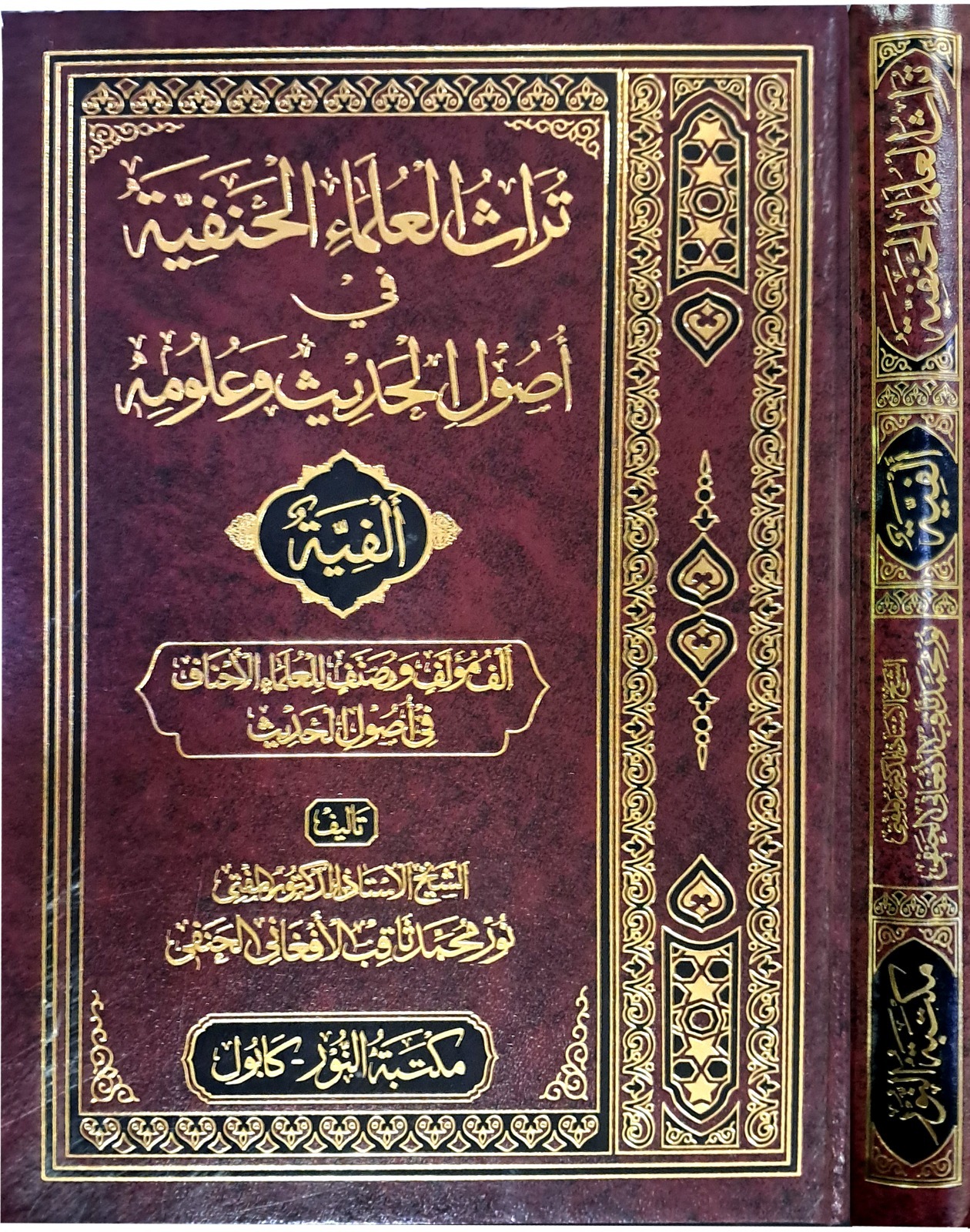
This extensive, significant, and authoritative research work in the domain of Hadith sciences and the scholarly legacy of Hanafi scholars has been authored by the Minister of MOHIA, the esteemed Shaykh al-Hadith Dr. Qazawatpoh Mufti Noor Mohammad Saqib. In this work, the vast and rich scholarly contributions of Hanafi scholars throughout history concerning the principles of Hadith and its sciences have been examined. A total of one thousand (1,000) valuable works from their writings and compilations—mentioned in recognized Hadith lexicons, bibliographies, and biographical sources—have been systematically collected after long-term, precise, and comprehensive research.
In the introductory sections of the book, the author not only explains the definition, subject matter, purpose, and various names of the science of Uṣūl al-Hadith and Hadith sciences, but also presents one hundred and seven (107) important types of this discipline in six chapters with precision. These chapters comprehensively and systematically address key topics such as the identification of Hadith narrators, methods of transmission, classification of Hadith in terms of acceptance and rejection, discussions related to the text (matn) and chain of transmission (isnād), as well as various subjects related to the shared sciences between matn and isnād.
Following these valuable introductory discussions, the author has adopted a precise, systematic, and thoroughly methodological approach in organizing and structuring the work. This vast scholarly heritage of the Hanafi school—comprising one thousand (1,000) works—has been divided into twenty (20) volumes. Each volume includes fifty (50) books, and the introduction of each book is arranged according to the chronological order of the authors’ deaths, along with the full name of each author and their date of death, presented with great accuracy. Furthermore, for the existence of each work—whether printed or manuscript—the author provides precise and well-documented references and sources, demonstrating his scholarly integrity, research precision, and methodological commitment. Additionally, he notes that many of these works are موجود in his personal library.
This chronological and scholarly arrangement of the works not only illustrates the continuity of intellectual development and scientific progression among Hanafi scholars throughout Islamic civilization in the field of Hadith principles and sciences, but also clearly shows that Hanafi scholars in every era and century have made continuous and sustained scholarly efforts in this field. They have left behind a vast and rich body of writings and contributions, thereby disproving the mistaken view that considers the role of Hanafi scholars in Uṣūl al-Hadith and Hadith sciences to be limited or minimal.
The publication of this valuable work serves not only as an important and accessible reference for religious schools, universities, and academic and research centers in Afghanistan, but also opens new avenues of research for scholars and researchers across the Islamic world—particularly for those interested in studying the scholarly contributions of Hanafi scholars in the field of Hadith principles and sciences. This book is regarded as a significant and reliable source for scholars, professors, students, and Hadith specialists, as the author, with great precision and integrity, has brought to light a body of scholarly heritage that had previously remained largely unknown or inaccessible to researchers. Through this work, researchers can achieve their academic objectives, broaden their research horizons, and become more familiar with the scholarly legacy of Hanafi scholars.
In conclusion, this work is the result of long-term effort, deep research, and tireless dedication, in which the author’s scholarly patience, precision, and integrity are clearly evident.