Meeting of the Ministry of MOHIA with Unofficial Religious Scholars of Jawzjan Province Tuesday, 1 Jumada al-Awwal 1448 AH, corresponding to 21 Mizan 1405 .
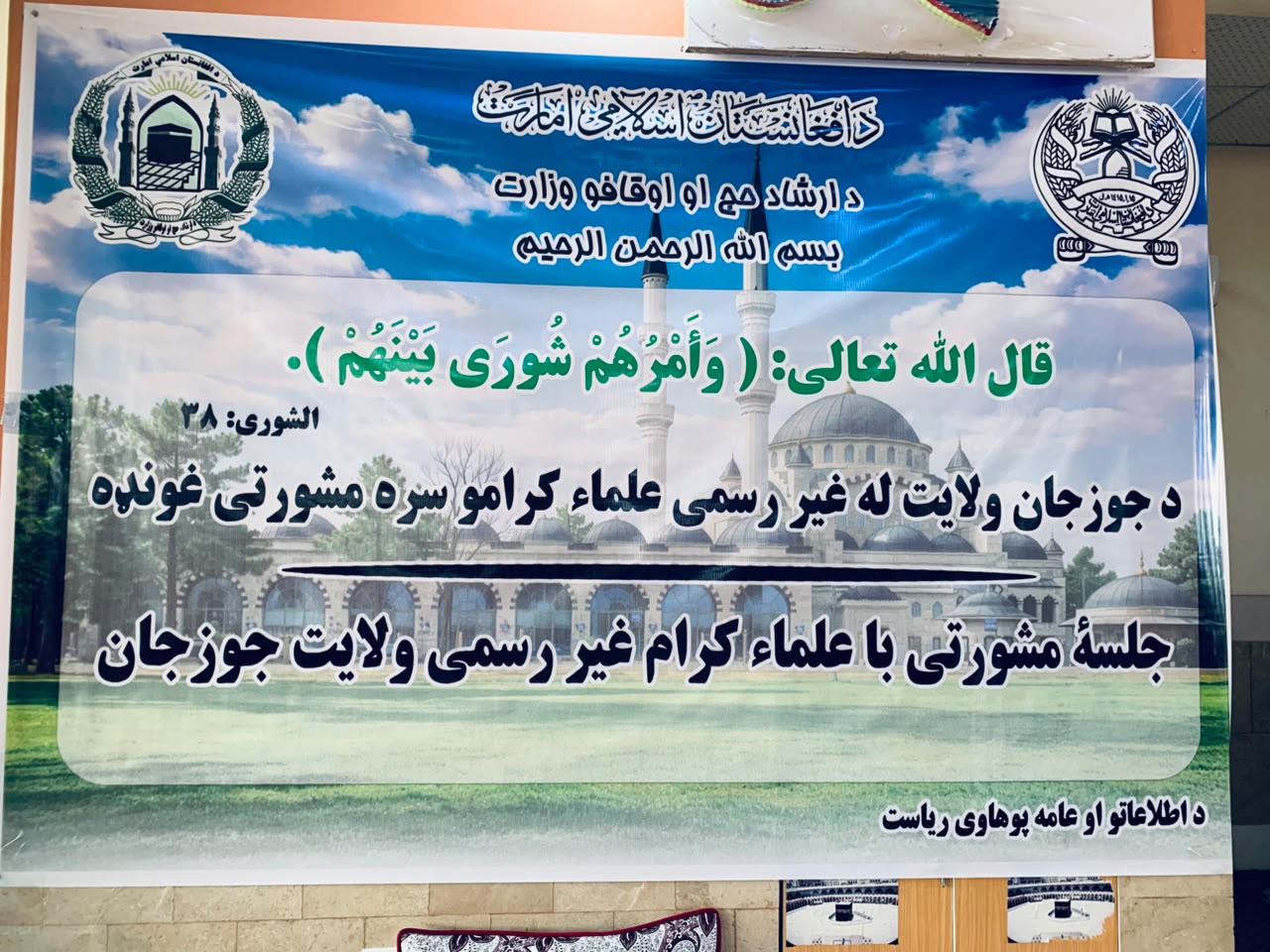
Following the directive of His Highness the Amir al-Mu’minin, may Allah preserve him, the Ministry of MOHIA held a meeting with unofficial religious scholars from all districts of Jawzjan Province.
The meeting was attended by Mawlawi Hafiz Mohammad Hamid Hasib, the Ministry’s Deputy Minister for Professional Affairs, who chaired the meeting; Makhdoom Mawlawi Abdul Salam Saadat, the Ministry’s Deputy Minister for the Coordination of Sufism and Religious Sites; several directors from the Ministry’s central offices; Qari Mohammad Nasim Ezzat, Deputy Governor of Jawzjan Province; the provincial directors of MOHIA, Education, the Promotion of Virtue and Prevention of Vice, Information and Culture, the Court of Appeal, and the Provincial Council of Scholars; as well as dozens of unofficial religious scholars representing all ten districts of Jawzjan Province.
The meeting began with the recitation of several blessed verses from the Holy Quran. Subsequently, Mawlawi Saifuddin Azizi, Director General of Administration and Finance at the Ministry, delivered the opening speech and provided the participants with information about the purpose and objectives of the meeting.
Following this, Mufti Nusratullah Mansour, Director of MOHIA in Jawzjan Province, conveyed the message of His Highness the Amir al-Mu’minin, may Allah preserve him, to the respected religious scholars.
The heads of several prominent religious seminaries, including Abu Sulaiman Juzjani Madrasa, Jalaliya Madrasa, Shaheen Darul Uloom, Sadat Madrasa, and Dasht-e-Laili Martyrs Madrasa, along with a number of other respected religious scholars, also delivered speeches on the importance of the Islamic system, the role of the mosque’s pulpit and mihrab in reforming society, and the responsibilities of religious scholars in consolidating the Islamic system.
The speakers also emphasized the importance of resolving social problems and disputes, providing children with sound Islamic upbringing, promoting virtue and preventing vice, and avoiding and preventing undesirable customs, discord, and prejudice. They identified obedience to the Ulul Amr (those in authority) as one of the key responsibilities in strengthening the Islamic system.
Subsequently, Mawlawi Hafiz Mohammad Hamid Hasib, the Ministry’s Deputy Minister for Professional Affairs, addressed the participants. Referring to the special message of His Highness the Amir al-Mu’minin, may Allah preserve him, concerning the holding of meetings with unofficial religious scholars, he stated that engagement with religious scholars was not limited to the Ministry of MOHIA. Rather, the ministries of Education, the Promotion of Virtue and Prevention of Vice, and Information and Culture, as well as the courts and the Council of Scholars, also maintained direct relations with them.
He further stated that the Islamic system of Afghanistan had been established through the blood of martyrs and the sacrifices of the Mujahideen, and that no one had presented it to Afghans as a gift. Therefore, he emphasized that religious scholars bore a greater responsibility than others for preserving, maintaining, and strengthening the system.
The Deputy Minister noted that people from all ethnic groups, linguistic communities, and regions of the country were represented in the Islamic Emirate, and that the system exercised full authority throughout the country. He stressed that, in order to reform and advance the affairs of the system, the advice, support, and cooperation of the country's religious scholars were essential, rather than relying on the advice of foreigners and outsiders.
Thereafter, Makhdoom Mawlawi Abdul Salam Saadat, the Ministry’s Deputy Minister for the Coordination of Sufism and Religious Sites, delivered a speech on the achievements of the Islamic Emirate of Afghanistan. Referring to the country’s past situation, he stated that Afghans had endured bitter experiences of oppression, injustice, and insecurity. He also paid tribute to the martyrs of Dasht-e-Laili and described the establishment of the Islamic system as the outcome of the sacrifices made by religious scholars, teachers, young people, Mujahideen, and the people of the country.
He emphasized the responsibility of religious scholars to preserve and strengthen the Islamic system, stating that they should fulfil their duties through the mosque’s mihrab and pulpit by explaining the rulings of Islamic Sharia, preventing disputes, and clarifying the truth in response to false rumours.
Referring to the economic significance of the country's development projects, including the Qosh Tepa Canal and Aqina Port, the Deputy Minister stated that the country's progress and the strengthening of the system required joint cooperation between the people and the government. He described the role of religious scholars in this regard as important and stressed that they should actively fulfil their responsibilities in strengthening relations between the people and the government, conveying the public’s concerns, and enhancing trust and coordination.
At the conclusion of the meeting, Qari Mohammad Nasim Ezzat, Deputy Governor of Jawzjan Province, expressed his gratitude and appreciation to the participants. He described the discussions held during the meeting as beneficial and considered the views and recommendations of the religious scholars important for reinforcing and strengthening the Islamic system.
The meeting concluded with a prayer for blessings and well-being.